

The 86-page report, presented Tuesday afternoon during a two-hour work session, concluded that a proposed mixed-use development could generate millions of dollars in new economic activity, hundreds of jobs, increased household spending, additional tax revenue, and several other benefits described primarily through charts.
While officials cautioned that many of those impacts will depend on construction actually occurring, businesses opening, people being hired, customers arriving, and several optimistic multipliers behaving as instructed, the economic impact on consultant Randall Pierce was immediate.
“This is exactly the kind of measurable result we were hoping to see,” said Authority Chairman Dennis Walcott, pointing to an invoice in the meeting packet. “The money has left our account and entered his. That part is extremely well documented.”
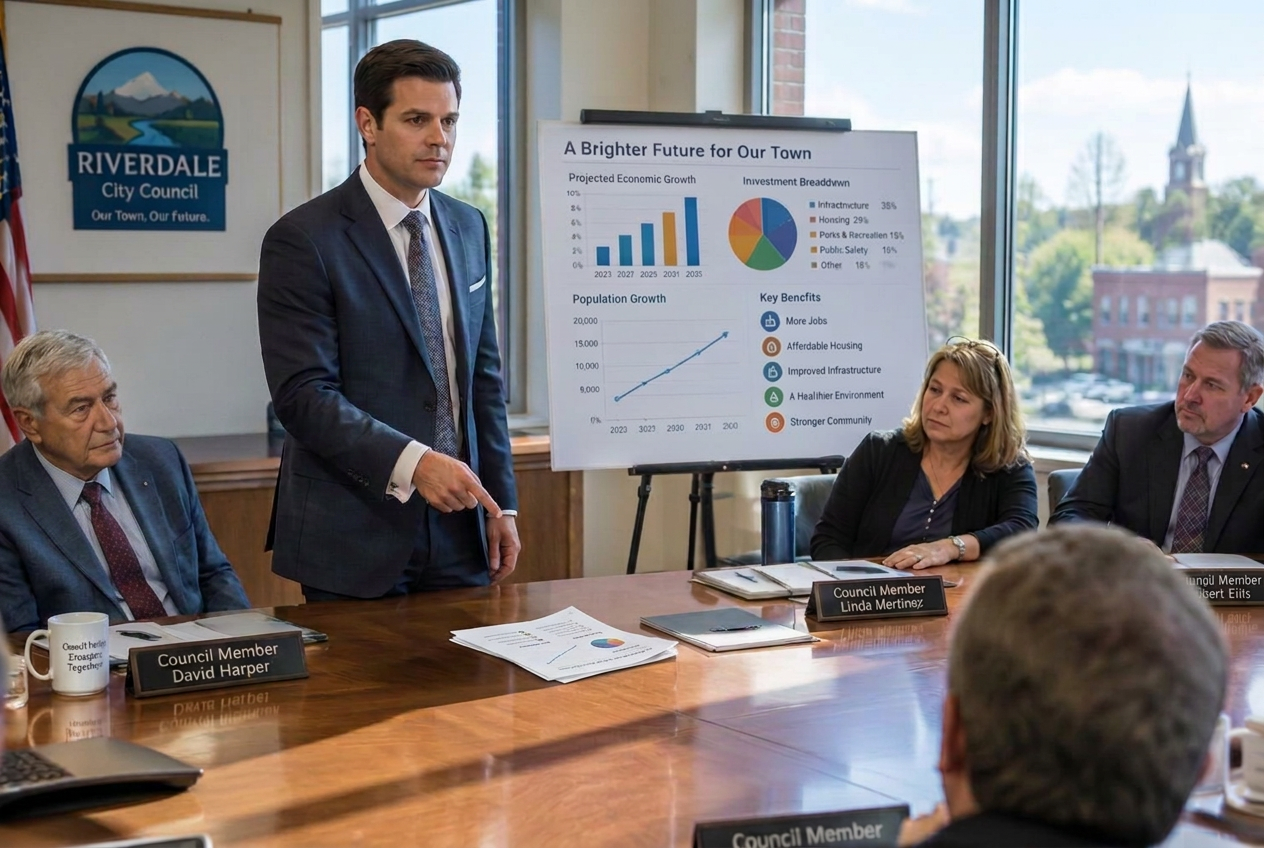
The study estimates that the proposed development could support 612 direct, indirect, induced, catalytic, adjacent, emotionally supportive, and generally nearby jobs over a 20-year period.
Pierce explained that economic impact modeling allows communities to better understand how one dollar moving through an economy may eventually become several dollars, provided it continues moving and nobody asks too many questions about where it went.
“For example, a construction worker earns a paycheck, buys lunch, the restaurant pays an employee, that employee buys tires, and eventually everybody is prosperous,” Pierce said. “It’s really quite beautiful.”
The report also includes a section titled Fiscal Impact, another titled Economic Impact, and a third titled Community Impact, which officials confirmed are different things.
According to the executive summary, the project could create an estimated $138 million in total economic activity. When asked whether that meant $138 million would actually be created, Authority staff said the question demonstrated why the community needed the study.
Economic Development Director Melissa Barnes said the document will be useful when presenting the project to elected officials, residents, potential investors, skeptical taxpayers, and anyone else requiring a very specific number attached to something that has not happened yet.
“You can’t walk into a council meeting and say, ‘We think this will probably be good,’” Barnes said. “You need to say, ‘This will have a $138 million economic impact,’ preferably with a graph.”
Several board members praised the study for validating conclusions they had already reached before commissioning it.
“That was important to us,” said Walcott. “We needed an independent third party to objectively confirm what we were already planning to tell people.”
The consultant’s economic impact may extend beyond the initial contract.
During Tuesday’s presentation, Pierce recommended a second-phase market analysis, a fiscal sustainability review, an implementation strategy, and an annual update to determine whether the assumptions in the original study continue to support commissioning additional studies.
Authority members expressed interest.
“We don’t want this report sitting on a shelf,” Barnes said. “At some point, we may pay someone to develop a strategy for implementing it.”
Pierce said he is available.