The situation began Monday morning when Harrison Components announced that entry-level production workers would now start at $21.50 an hour.
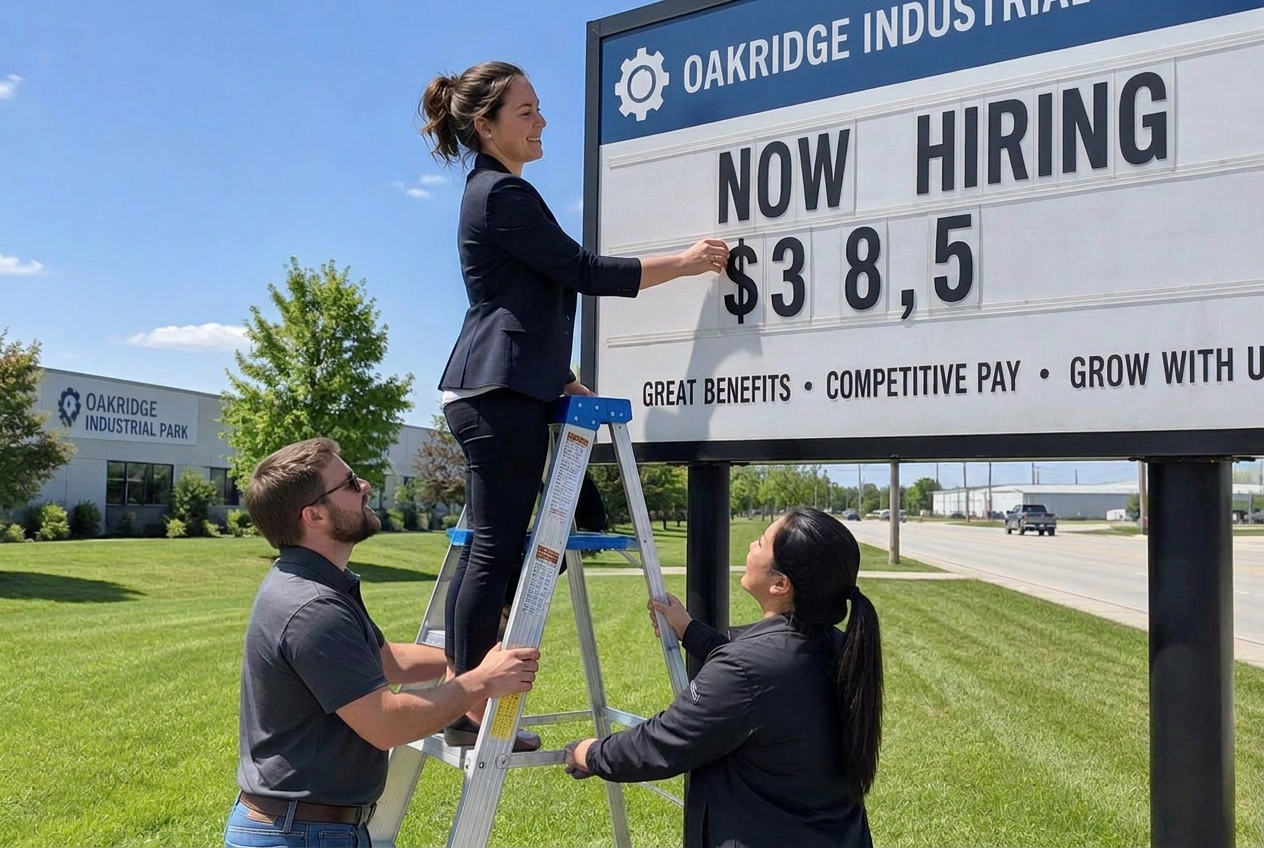
By lunchtime, three competing manufacturers had updated their job postings.
By Tuesday, a distribution center had added a $1,500 signing bonus.
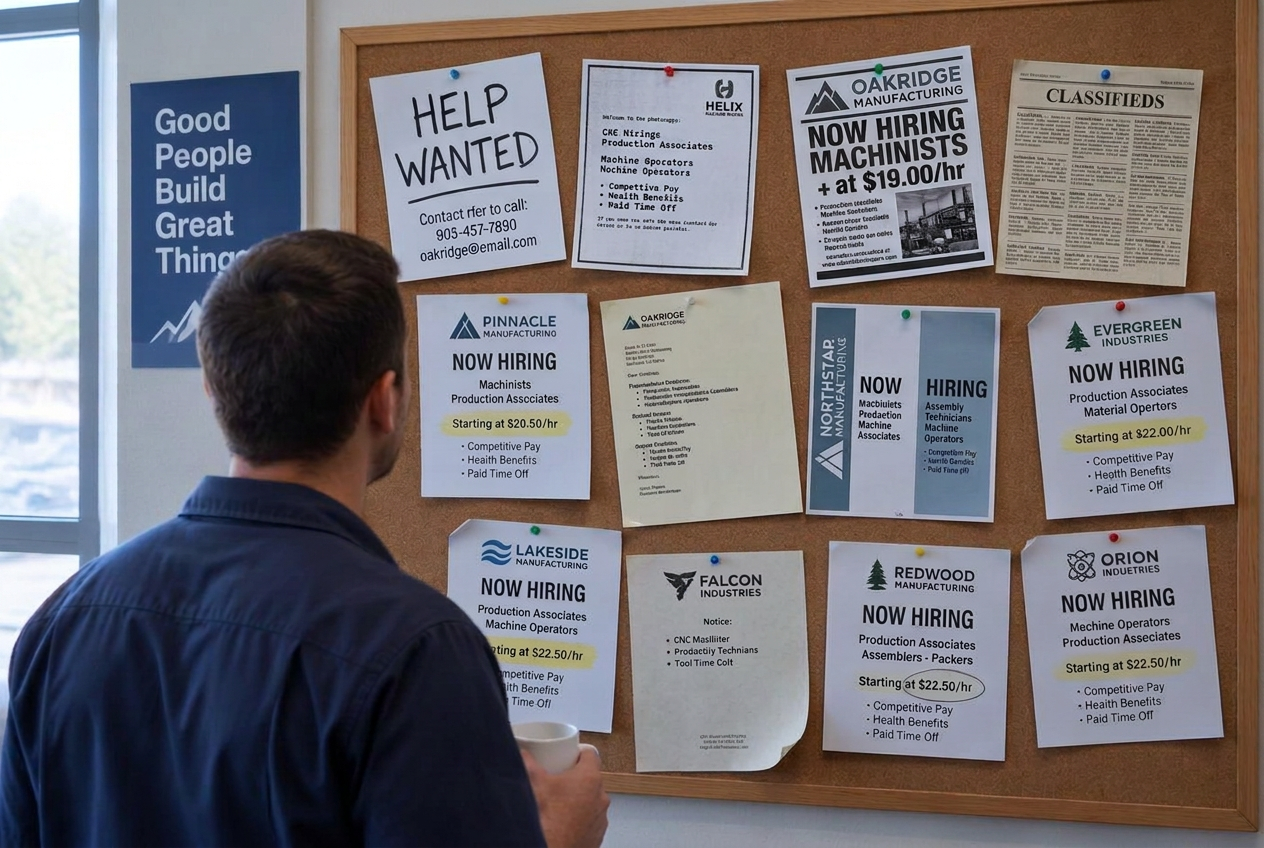
By Wednesday morning, a food processor was offering $22 an hour, quarterly attendance bonuses and what its recruiting materials described as “premium break-room coffee.”
“This got away from us pretty quickly,” said Oakridge Economic Development Director Melanie Crawford.
According to Crawford, Harrison Components originally intended the wage increase as a straightforward employee recruitment initiative.
“They weren’t trying to disrupt the entire labor market,” she said. “They just needed 80 people.”
Unfortunately, several other companies also needed 80 people.
Harrison’s announcement spread rapidly through the local manufacturing community after one human resources director noticed the new wage on Indeed and immediately texted a screenshot to six other HR directors.
Within minutes, economic development officials began receiving calls.
“The first call was basically, ‘Have you seen what Harrison is doing?’” Crawford said.
“The second call was, ‘Are they serious?’”
“The third call was from Harrison asking why everybody was calling them.”
Local employers initially attempted to remain calm.
“We’re not going to get into a bidding war,” said Morrison Plastics President Greg Palmer on Monday afternoon.
On Tuesday morning, Morrison Plastics increased starting wages by $1.75.
Palmer said the timing was coincidental.
“We review compensation constantly,” he said.
The company’s previous compensation review had occurred 11 months earlier.
By midweek, employers across Oakridge County were announcing wage adjustments, retention bonuses, referral incentives and increasingly aggressive benefit packages.
One company added four additional paid holidays.
Another eliminated its 90-day waiting period for health insurance.
A third began advertising “Climate-Controlled Facility” in bold letters after realizing several competitors could not make the same claim.
“This is no longer just about hourly pay,” said workforce consultant Janet Holloway. “We’ve entered total-compensation territory.”
Employers have also begun emphasizing scheduling.
A machining company introduced four-day workweeks.
A warehouse countered with predictable schedules.
A nearby manufacturer announced that employees could listen to music during portions of second shift.
“That one caused some concern,” Crawford said.
At least two employers reportedly held emergency management meetings to determine their corporate policy on earbuds.
The wage competition has created unexpected challenges for local workforce organizations.
For years, officials encouraged companies to offer more competitive compensation as a solution to recruitment and retention problems.
They now admit they did not fully anticipate what would happen if everybody did it simultaneously.
“This is technically what we asked for,” said Workforce Development Director Aaron Mitchell.
He stared at a spreadsheet showing recent wage increases.
“We just pictured it happening more gradually.”
Employees have responded enthusiastically.
Several longtime production workers have reportedly discovered that their market value increased significantly since Monday.
“I wasn’t looking for another job,” said Oakridge resident Terry Jenkins. “Then three companies told me what they’d pay me not to work where I currently work.”
Jenkins said he plans to remain with his current employer.
His current employer raised his wage Thursday morning.
Experienced maintenance technicians have become particularly valuable.
One technician reportedly received recruiting messages from five companies in a single afternoon despite not having applied anywhere.
“He apparently exists,” said one HR manager. “That’s enough right now.”
Local employers insist they remain committed to regional workforce collaboration.
Many participate together in industry councils, technical education partnerships and workforce development committees.
At Thursday’s Oakridge Manufacturing Alliance meeting, company representatives spent the first 20 minutes discussing regional cooperation.
They spent the next 45 minutes attempting to determine who had increased shift differential to $2.50.
“We’re all partners here,” Palmer said.
He then asked Harrison Components CEO Mark Reynolds whether the rumor about a new retention bonus was true.
Reynolds declined to comment.
Palmer immediately sent a text message.
Economic development officials say the wage increases could ultimately benefit the entire community by raising household incomes and making local jobs more attractive.
There is, however, concern that the increasingly aggressive recruiting environment may simply move the same employees among companies.
“We need to grow the labor pool,” Crawford said. “Otherwise we’re just passing people around at progressively higher salaries.”
Employers agreed.
Several have therefore expanded recruiting into neighboring counties, where companies have begun noticing Oakridge’s higher wages.
Workforce officials confirmed Thursday that two employers 35 miles away have now increased starting pay.
“So apparently we’ve expanded the arms race regionally,” Mitchell said.
Harrison Components, meanwhile, says it has no regrets.
Applications have increased sharply since the company announced the higher wage.
“We needed workers, and this is what the market required,” Reynolds said.
Asked whether Harrison might raise wages again if competitors surpass $21.50, Reynolds smiled.
“We’ll stay competitive.”
Within two hours, that quote had been forwarded to virtually every human resources manager in Oakridge County.
At press time, a local manufacturer had raised its starting wage by another 50 cents after hearing an unconfirmed rumor that somebody else was thinking about doing it.