The finding emerged during a six-month workforce initiative designed to understand why employers across the Rivercrest region continued struggling to fill open positions despite extensive recruitment efforts.
“We looked at transportation, childcare, awareness, job quality, career pathways, workplace culture and training,” said Workforce Development Director Alicia Monroe. “All of those things matter.”
She paused.
“Then several companies raised wages and applications increased immediately.”
Officials described the development as both encouraging and mildly irritating.
One manufacturer had spent nearly a year trying to fill 48 production positions using job fairs, social media advertising, employee testimonials and a professionally produced video featuring drone footage of the facility.
Applications remained flat.
The company then increased starting pay by $2 an hour.
Applications tripled.
“We learned a lot from the video campaign,” said Human Resources Manager Patrick Sloan. “Mainly that people liked the pay increase better.”
Regional workforce consultants said the result was not entirely surprising.
“What we’re seeing is a strong relationship between compensation and worker interest,” said consultant Rebecca Hall. “Employees appear to place significant value on being paid more.”
Officials said additional research may be needed to determine whether the pattern holds across industries.
The region’s economic development partnership had previously launched a talent attraction campaign highlighting affordable housing, short commutes, outdoor recreation and quality of life.
The campaign performed well online.
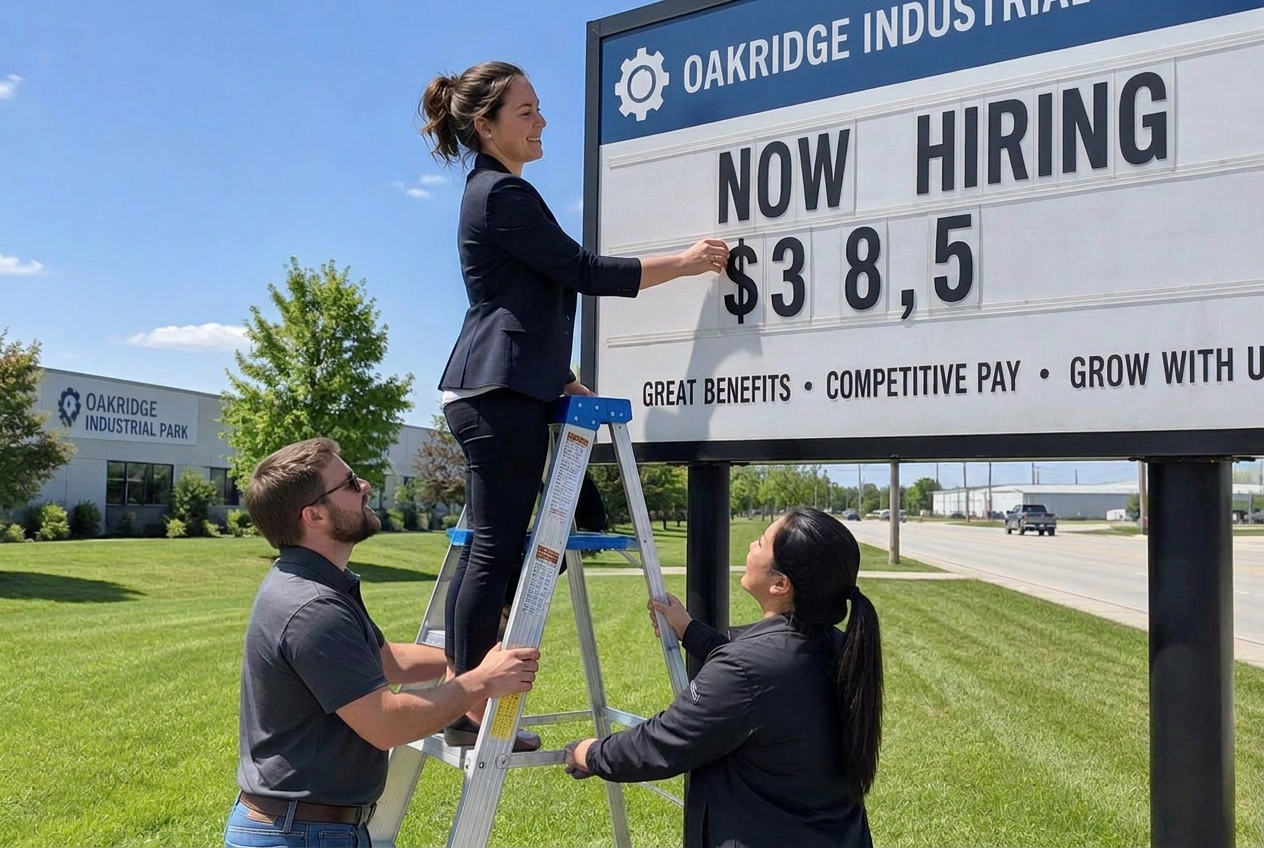
A separate advertisement reading “Starting at $24.50/hour” generated more applicants in four days.
“That one had no photography at all,” Monroe said.
Several employers admitted they had initially hoped workforce challenges could be solved through strategies that did not involve changing compensation.
“We thought maybe people just didn’t know about us,” said local plant manager Greg Wallace.
The company increased awareness through digital advertising.
People became aware.
They still did not apply.
“We then thought maybe they didn’t understand our culture,” Wallace said.
The company created employee videos.
Workers reportedly understood the culture.
They still did not apply.
The company later increased wages.
“They understood that immediately,” Wallace said.
Local leaders stressed that compensation is not the only factor influencing workforce decisions.
Benefits, advancement, schedules, management quality and flexibility remain important.
Still, officials acknowledged that higher wages appear to have an unusual ability to make several other workforce problems less severe.
One employer struggling to recruit second-shift workers increased its shift differential.
Second shift became more popular.
Another company increased maintenance technician pay.
Maintenance technicians appeared.
A third employer added a signing bonus.
Workers who had previously been described as “difficult to reach” became substantially easier to reach.
“It’s fascinating,” Hall said.
Regional employers have responded cautiously to the findings.
Several executives said continually increasing wages is not sustainable.
Workforce officials agreed and encouraged companies to consider productivity, automation, training and retention strategies.
They also suggested that employers avoid describing jobs as “competitive pay” without checking whether the pay is, in fact, competitive.
“That phrase has been carrying a lot of weight,” Monroe said.
One company recently discovered its “competitive” wage was $3.40 below the regional average.
Executives said they were surprised.
Applicants were not.
The workforce initiative also examined why some residents were commuting to jobs in neighboring counties.
Previous theories included career preferences, industry mix and lifestyle considerations.
Researchers found many commuters were earning more money.
“That was another breakthrough,” Hall said.
Economic development officials say the findings will help improve future business recruitment conversations.
Communities often highlight workforce availability when pursuing new projects, but Monroe said employers also need to understand what it costs to compete for that workforce.
“You can have 100,000 people in the labor shed,” she said. “They still get to decide where they work.”
The statement was reportedly added to the next presentation in smaller font.
Despite the conclusions, Rivercrest leaders remain committed to a broad workforce strategy.
The region will continue investing in training, transportation, childcare and talent attraction.
Officials say those programs are essential to long-term competitiveness.
They will simply be accompanied by a new recommendation.
“Pay attention to pay,” Monroe said.
At press time, regional leaders had scheduled a follow-up workforce summit titled “Beyond Compensation: What Else Do Workers Want?”
Registration is free.