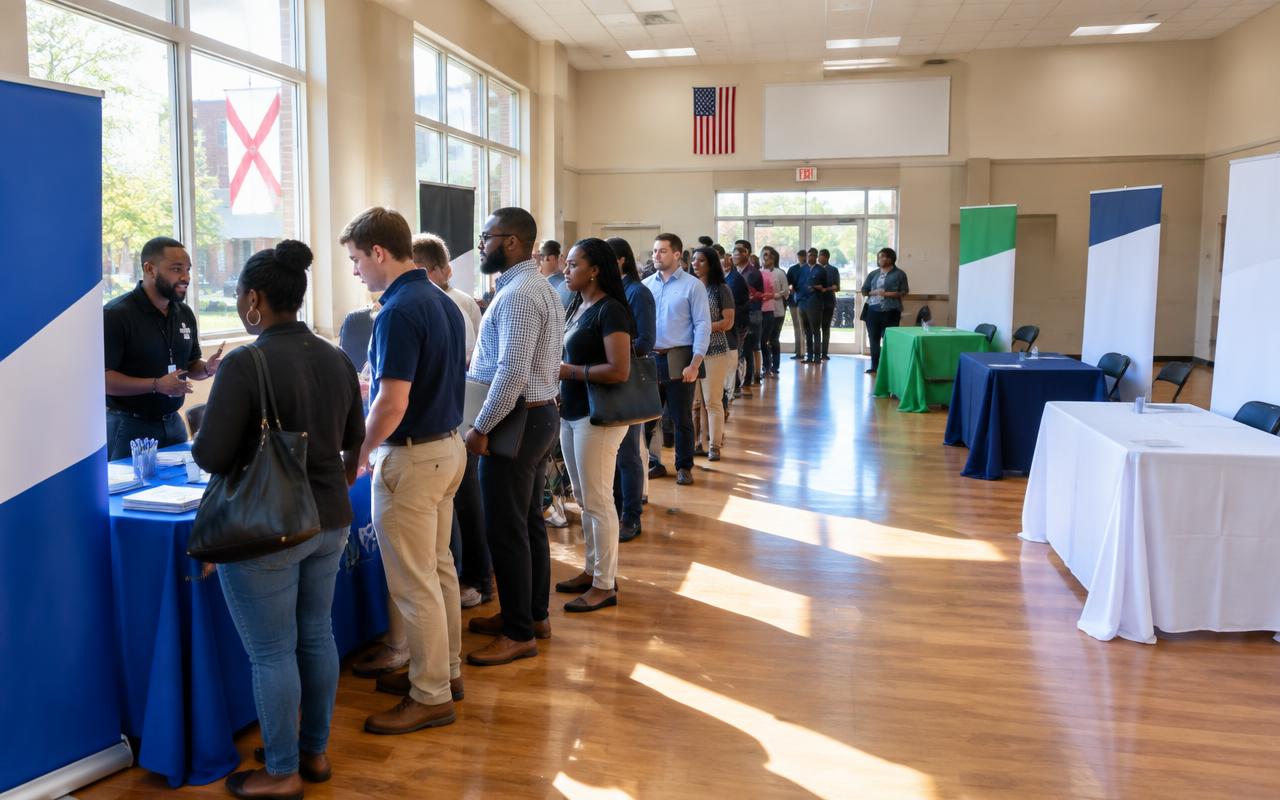
The event, hosted by the Cedarwick Regional Partnership, brought together manufacturers, healthcare providers, logistics firms and service companies for a day of collaboration focused on talent attraction, retention and what several attendees privately described as “seeing who else is paying what.”
“We all have the same challenge,” said Regional Partnership President Lisa Harmon. “There simply aren’t enough workers.”
Around the room, several employers nodded while discreetly photographing each other’s recruiting banners.
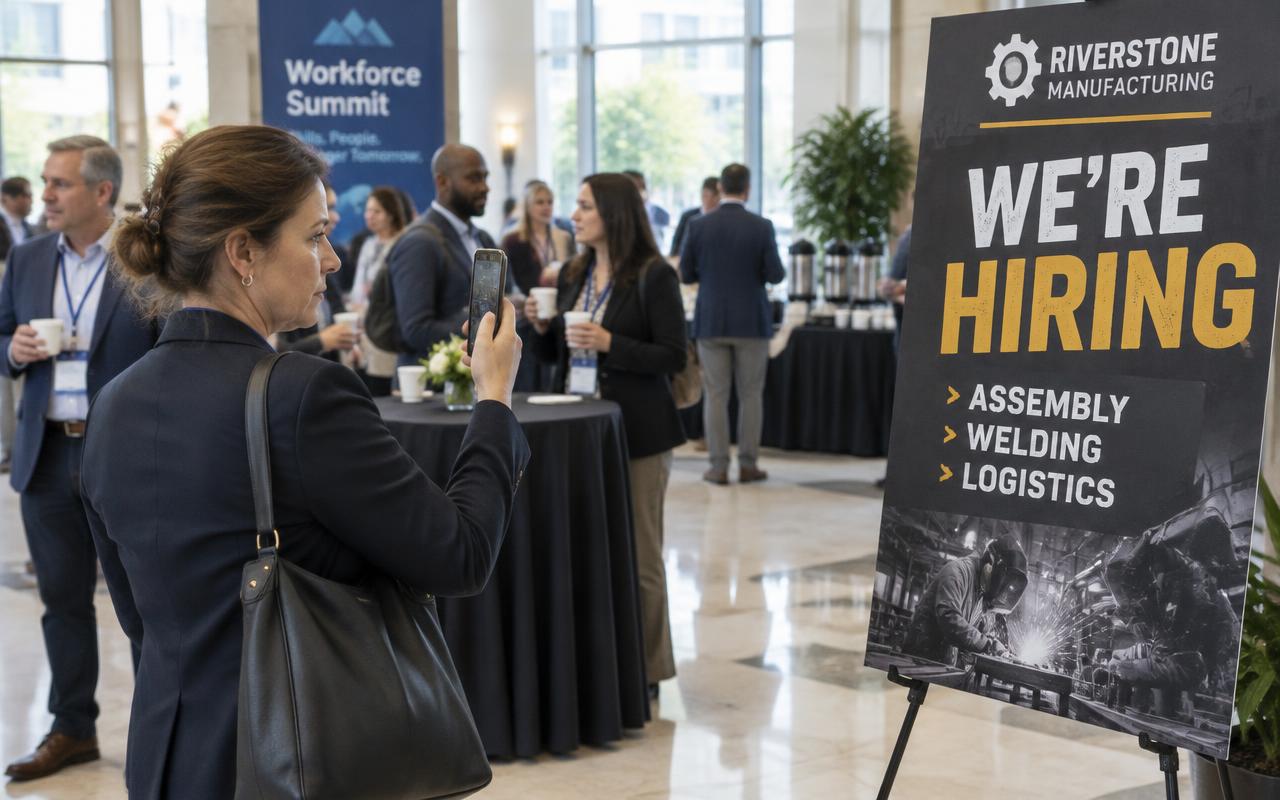
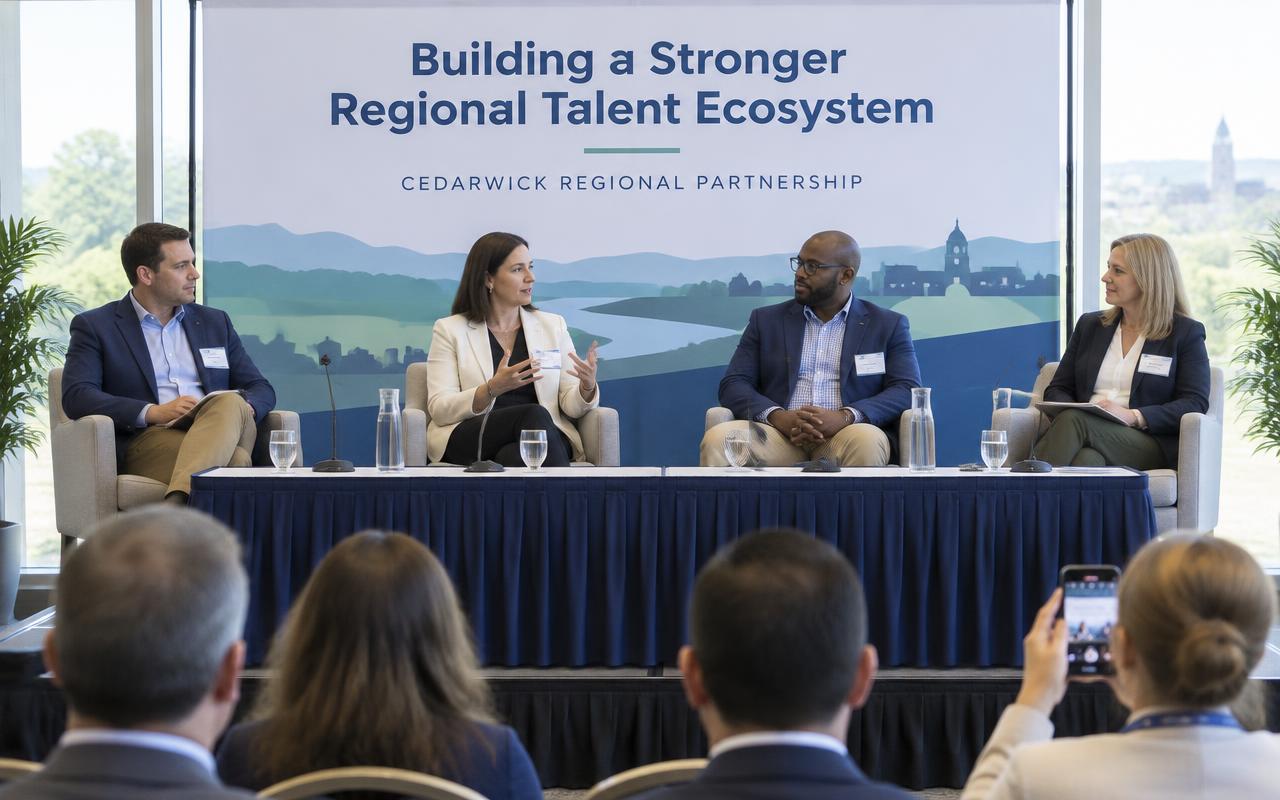
The summit opened with a panel discussion titled Building a Stronger Regional Talent Ecosystem, during which executives emphasized the importance of working together.
“We have to stop thinking in silos,” said Brent Walsh, plant manager for a local advanced manufacturing company. “This has to be a regional effort.”
Walsh’s company had reportedly hired 17 employees from another panelist’s company during the previous quarter.
“That’s exactly the kind of mobility we’re talking about,” he later clarified.
Organizers said the summit was designed to help employers understand shared workforce challenges and identify opportunities for collaboration.
Those opportunities included career awareness, training partnerships, childcare solutions, transportation and creating more competitive compensation packages than the company sitting at the next table.
“We want everybody in the region to succeed,” said Human Resources Director Natalie Price.
Price’s organization recently introduced a $2,000 signing bonus specifically targeting experienced workers in three occupations heavily represented at nearby employers.
“We’re not targeting anybody specifically,” she said.
The advertisement includes the phrase “Already working nearby? Let’s talk.”
During a breakout session on employee retention, participants discussed the importance of workplace culture, advancement opportunities, scheduling flexibility and wages.
The wage discussion lasted considerably longer than organizers had planned.
One employer mentioned raising starting pay by $1.50 an hour.
Three executives immediately left the room to make phone calls.
“They probably had another meeting,” Harmon said.
The summit also featured a presentation showing that the region’s labor force had grown by approximately 2% over five years while the number of open positions had increased significantly faster.
Employers described the data as concerning.
Several then announced expansion plans.
“We’ve got to grow the workforce,” Walsh said. “We can’t just keep moving the same people from building to building.”
Later that afternoon, his HR manager was seen speaking with two forklift operators from another company near the coffee station.
Workforce officials emphasized that employee movement between companies is not necessarily a bad thing.
“People should have the opportunity to advance,” said Workforce Development Director Karen Doyle. “If someone can improve their career, earn more money or find a better fit, that’s positive.”
Local employers agreed strongly with that statement when discussing workers they had hired.
They expressed somewhat less enthusiasm when discussing workers who had left.
“You invest in somebody for three years, train them, give them certifications, and then suddenly somebody across town offers them another dollar,” said one manufacturing executive.
Asked whether his company had ever hired trained workers from competitors, he paused.
“That’s different.”
The afternoon session focused on creating a stronger regional talent pipeline.
Employers discussed partnerships with high schools and colleges, apprenticeships, internships and career awareness programs.
Nearly every company expressed interest in reaching students earlier.
One employer suggested middle school.
Another recommended elementary school.
A logistics company asked whether preschool was “too aggressive.”
“We want young people to understand the careers available here,” Price said. “Before somebody else gets to them.”
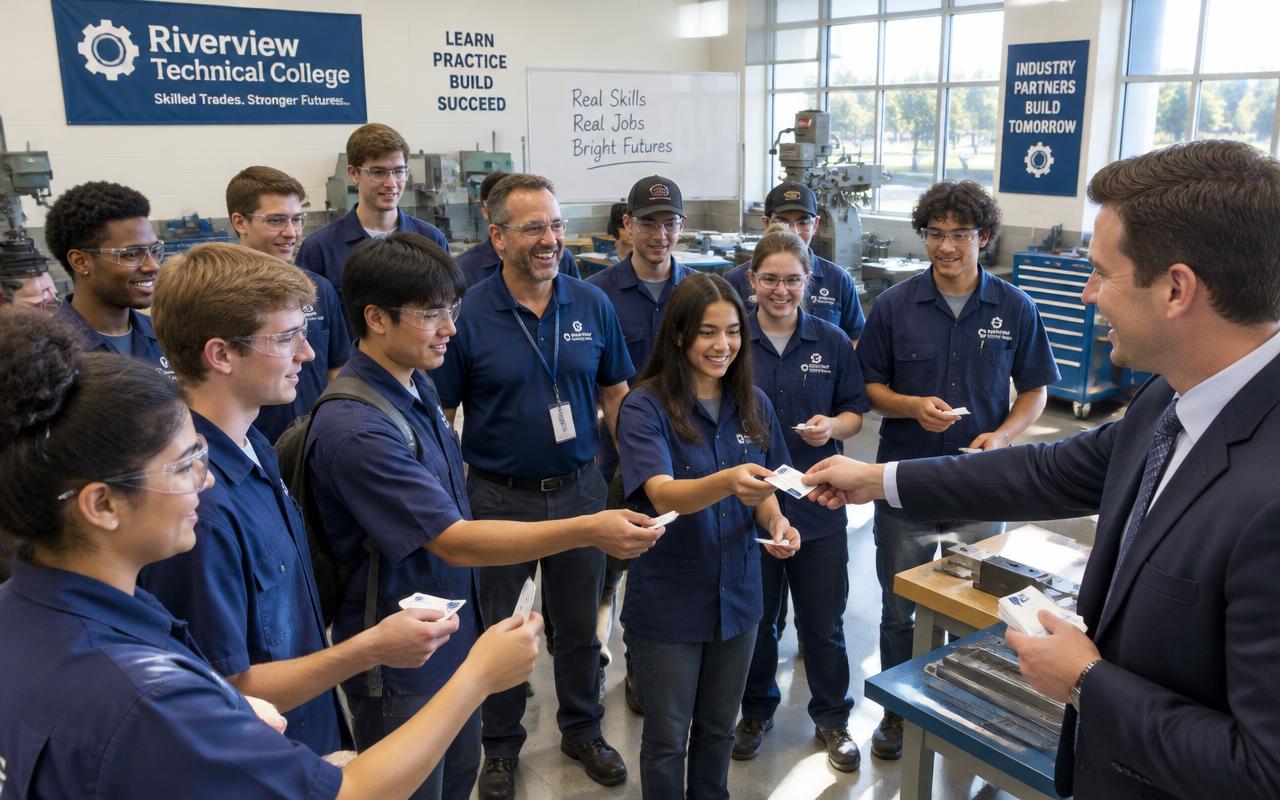
The technical college also announced plans to expand several high-demand training programs.
Employers applauded the news and immediately asked whether graduates could be directed toward their companies first.
College representatives explained that students were permitted to choose their own employers.
The room became noticeably quieter.
By late afternoon, participants had developed a list of regional workforce priorities including talent attraction, housing, childcare, transportation and retention.
They also agreed to create a shared marketing campaign encouraging workers to build careers in Cedarwick.
A disagreement emerged over whether the campaign should mention specific employers.
It lasted 43 minutes.
“We’re all competing, obviously,” Harmon acknowledged. “But we’re also all on the same team.”
She said the region’s long-term success depends on companies working together to grow the overall labor pool rather than simply shifting workers among existing employers.
Participants unanimously agreed.
The summit concluded at 4 p.m.
By 4:17, three attending companies had posted new job openings on LinkedIn.
One read:
“Ready for a change? Join one of Cedarwick’s fastest-growing employers.”
At press time, regional officials were planning a follow-up meeting on workforce retention after learning that two members of the workforce summit planning committee had accepted jobs with other participating companies.