The 86-page report, commissioned earlier this year to evaluate whether the region could support a major advanced manufacturing project, concluded that the area offers a “deep, resilient and scalable talent base” across nearly every occupational category under consideration.
Economic Development Director Sarah Whitcomb called the findings “extremely encouraging.”
“We asked the consultant to determine whether we had the workforce needed to support future growth,” Whitcomb said. “And fortunately, they found that we do.”
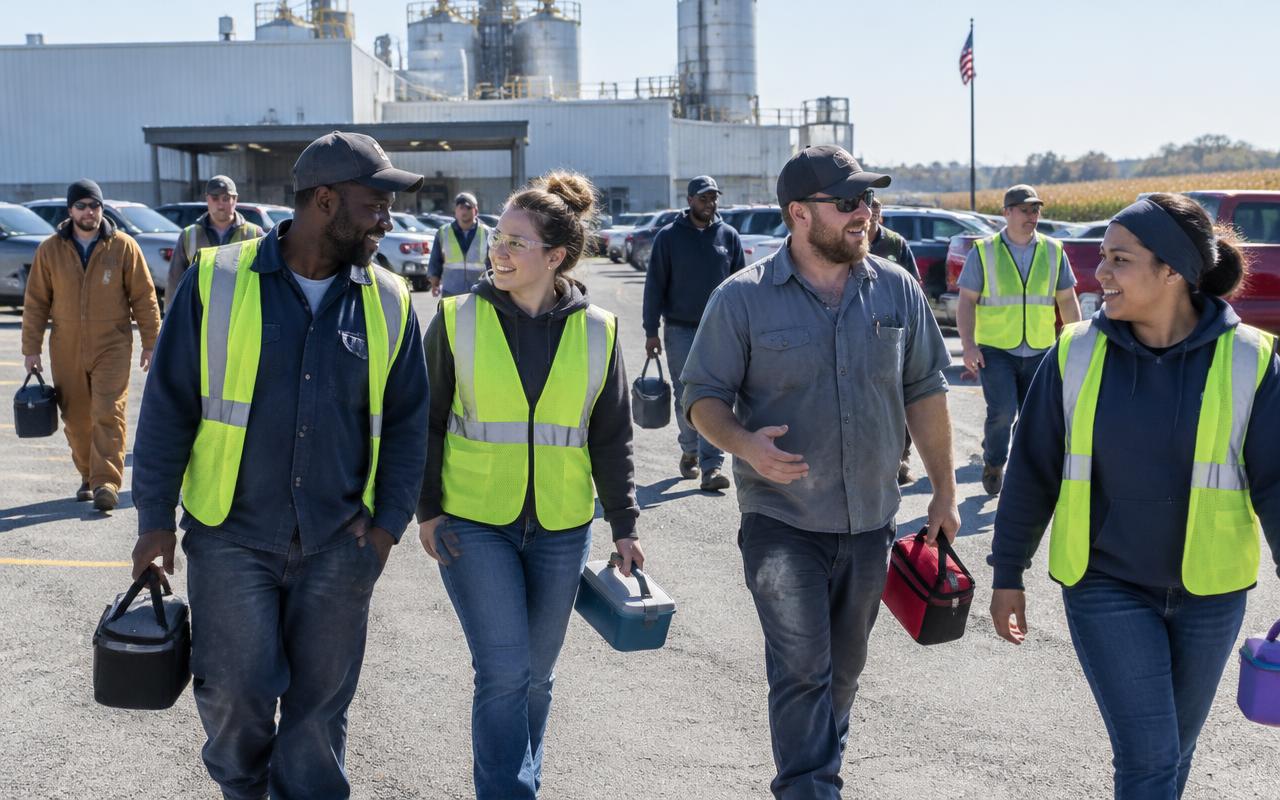
The study identified strong concentrations of production workers, maintenance technicians, engineers, logistics personnel, skilled trades and what the report described as “adjacent occupational talent with transferable capabilities.”
Asked what that meant, Whitcomb said it was one of the strongest parts of the report.
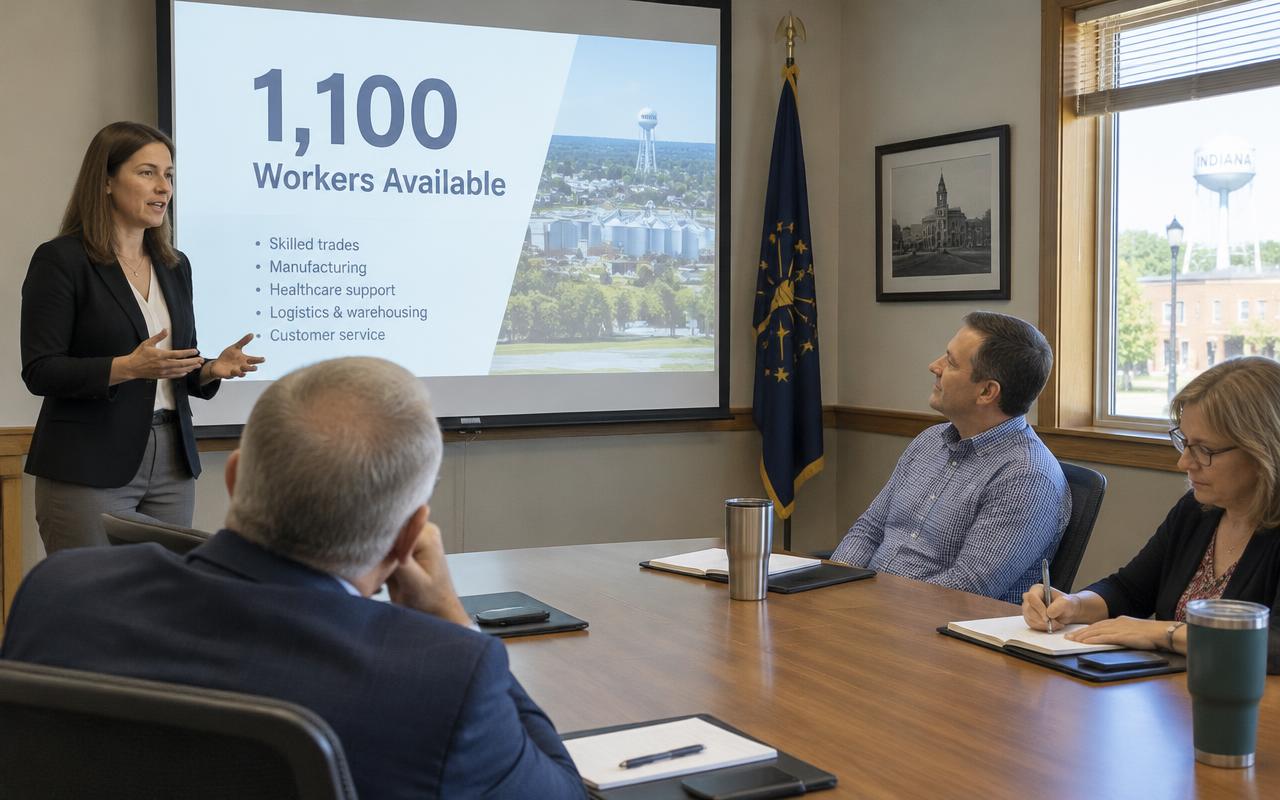
The consulting firm began its analysis with a stated objective of determining whether the region could supply approximately 1,100 workers for a hypothetical manufacturing project.
The final report concluded that the region could supply approximately 1,100 workers.
“Obviously, that gave us a lot of confidence,” said County Commissioner Mark Talley.
The report did not conclude that the region could support 3,000 workers.
No one had requested that.
Consultants said their methodology was rigorous and included analysis of labor force participation, unemployment, occupational concentrations, commuting patterns, wage levels, training pipelines, underemployment and workers currently employed in jobs they might theoretically leave for a sufficiently attractive opportunity.
That final category proved especially productive.
“We discovered a significant population of people who are technically unavailable because they already have jobs,” said lead consultant Daniel Foster. “But from a workforce development standpoint, we consider that more of a temporary condition.”
The report estimates that 7,400 people in the broader region could potentially be attracted to a new employer under the right circumstances.
Those circumstances include higher pay, better benefits, shorter commutes, improved schedules, advancement opportunities or simply becoming dissatisfied with their current employer at a convenient time.
“This is what we refer to as latent workforce capacity,” Foster said.
Local officials nodded approvingly.
The phrase has since been added to two presentations and a website draft.
The study also found that the region's commuting patterns substantially expand the available labor pool.
Workers from neighboring counties were included based on drive times of up to 45 minutes.
In several occupational categories, the analysis extended to 60 minutes.
For particularly difficult-to-find skills, the consultant examined 75 minutes.
“We wanted to understand the true regional workforce,” Foster explained.
Asked whether workers would actually commute 75 minutes each way for a production position, Foster said commuting behavior is highly dependent on wages.
Asked what wage would make that attractive, he said the study was not designed to answer compensation questions at that level of specificity.
The report also identified several thousand underemployed residents.
“Underemployment is an important part of the story,” Whitcomb said.
When asked how the consultants determined who was underemployed, she referred the question to Foster.
Foster explained that the estimate used a combination of education levels, occupational data and proprietary modeling.
“So those people told you they want different jobs?” a reporter asked.
“Not individually,” Foster said.
The study’s strongest conclusion concerned the region’s ability to train workers for occupations not currently available in sufficient numbers.
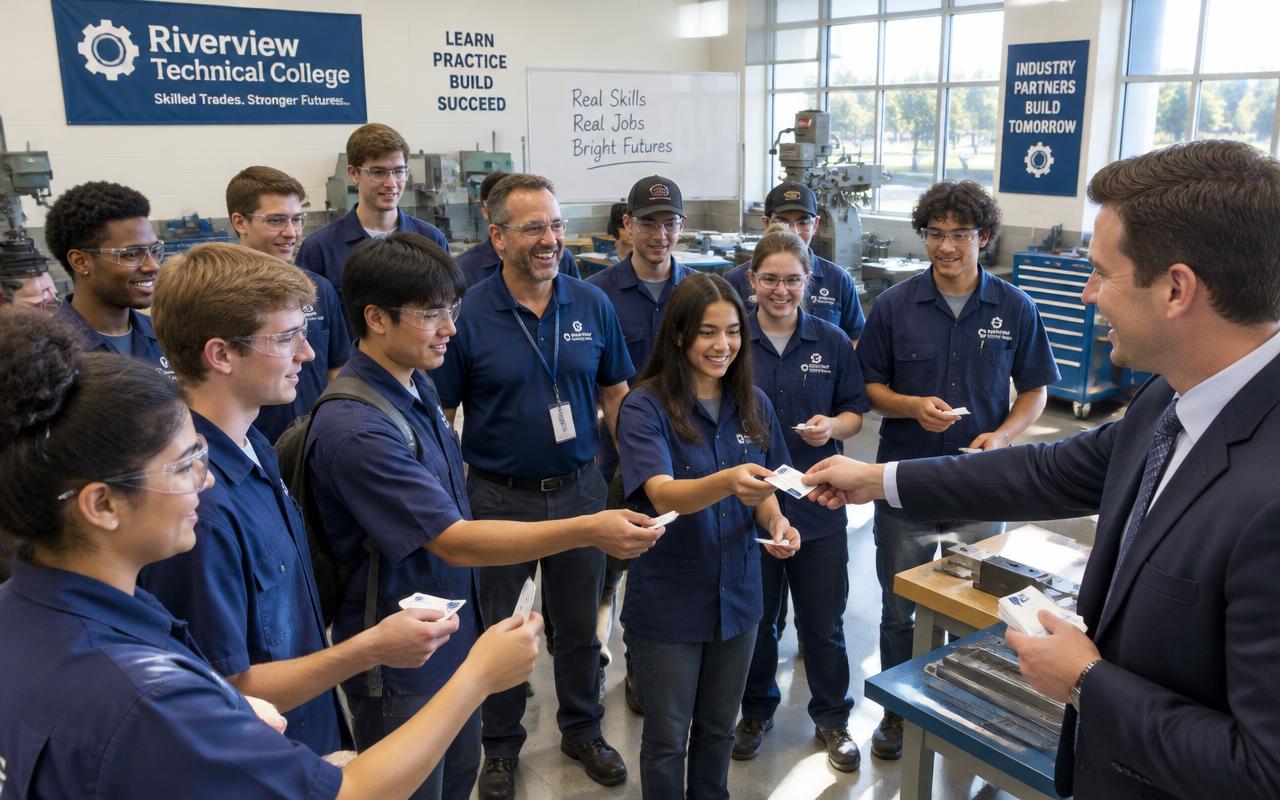
The local technical college confirmed it could develop customized programs for nearly any major employer.
College President Rebecca Lane said the institution could respond quickly to industry needs.
“We can build training around specific equipment, certifications and processes,” Lane said.
Asked how quickly the college could produce 200 experienced industrial maintenance technicians, she clarified that training and experience were “different workforce concepts.”
Despite such details, officials say the study provides exactly the kind of objective evidence needed to compete for major projects.
“This is not us saying we have the workers,” Talley said. “This is an independent consultant saying we have the workers.”
The consultant was paid $78,500 by the county.
Talley emphasized that the firm’s compensation was not tied to the study’s conclusions.
“We would have paid them the same amount if they came back and said we had no workforce whatsoever,” he said.
He paused.
“That would have been an awkward presentation.”
The study includes several charts showing projected worker availability under different scenarios.
In the “Baseline” scenario, the region can support the target project.
In the “Enhanced Recruitment” scenario, it can comfortably support the target project.
In the “Aggressive Talent Attraction” scenario, the region appears capable of supporting several target projects simultaneously.
There is no scenario labeled “This Might Be Difficult.”
Foster said that was because the purpose of scenario planning is to identify solutions.
“We don’t really think in terms of problems,” he said. “We think in terms of addressable workforce constraints.”
By the end of the county commission presentation, officials appeared satisfied that the region had answered one of its biggest economic development questions.
“We now know the workforce is here,” Whitcomb said.
The next step, she explained, will be determining where all of them are.
At press time, Pine Ridge had commissioned a second study to confirm that workers identified in the first study could actually be persuaded to take the jobs identified in the first study.