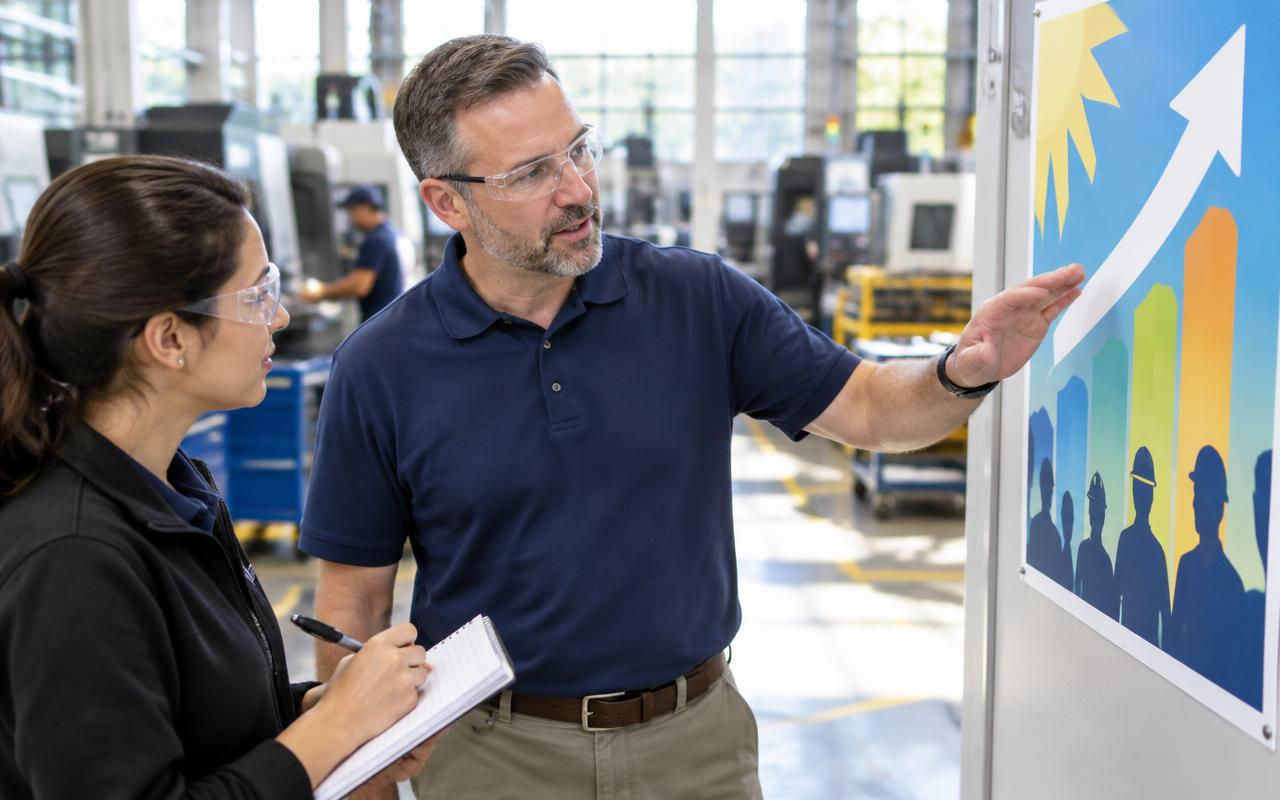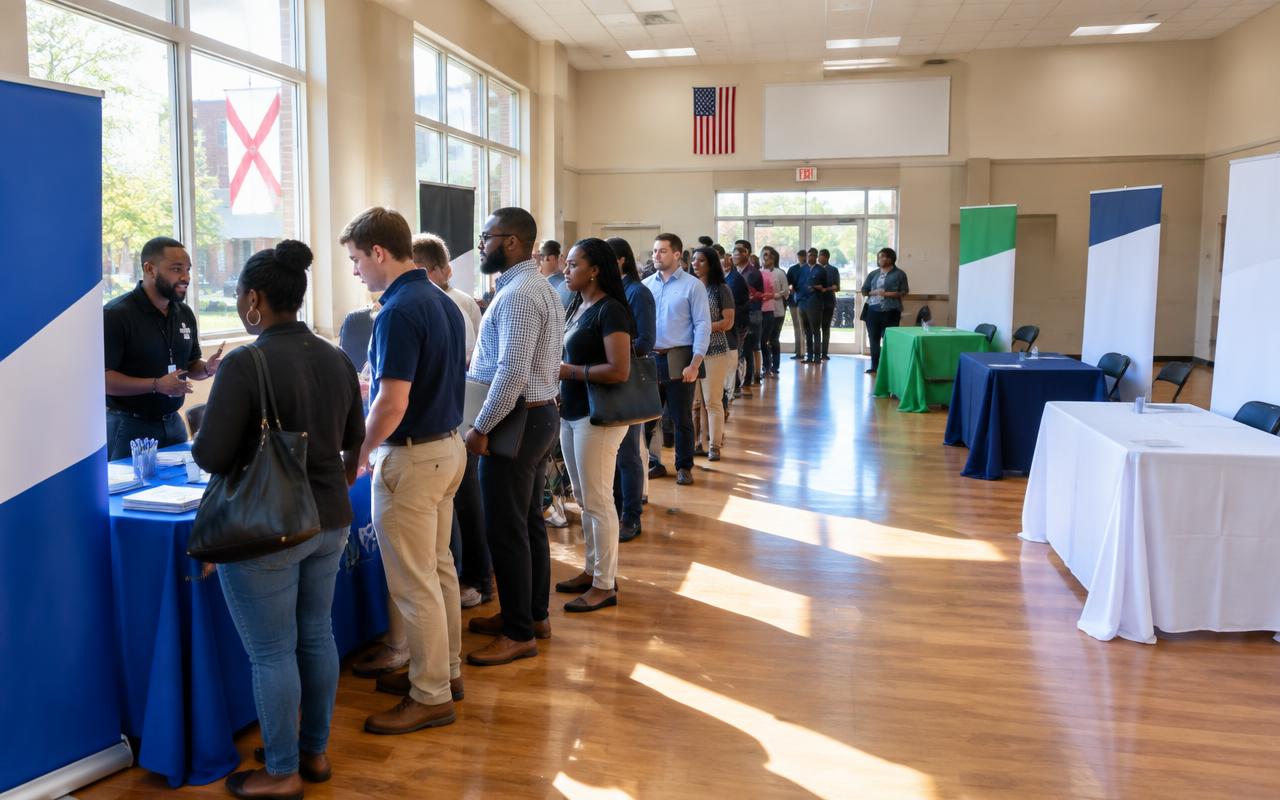

The 84-page report, presented Tuesday morning to the Cresthaven Economic Development Authority, identified strong demand across manufacturing, healthcare, logistics, construction, education, hospitality, childcare, public works, and “the person who knows how to reset the projector in the council chambers.”
According to the study, the region does not necessarily lack opportunity. It mostly lacks enough humans to do all the opportunity.
“The data is pretty clear,” said workforce consultant Natalie Briggs, who presented the findings. “If every current worker could divide into three fully functional adults, the region would be in excellent shape by the fourth quarter.”

Briggs described the recommendation as “ambitious but mathematically convenient,” noting that it performed better than other strategies tested in the report, including talent attraction, expanded training, regional commuting, improved childcare, and hoping young people return home because someone painted a mural near the courthouse.
The study found that Cresthaven has strong employer demand, a capable training ecosystem, and a good quality of life, but continues to face challenges related to housing, wages, transportation, childcare, and the fact that many workers are already busy being workers.
“We kept hearing the same thing from employers,” Briggs said. “They need one person who can weld, drive a forklift, manage inventory, pass a drug test, operate AutoCAD, show up at 6 a.m., supervise a team, and occasionally update Facebook. Our conclusion is that this is probably three people.”
Local employers praised the report for confirming what they have felt for years.
“We’ve had one maintenance position open since February,” said plant manager Roy Timmons. “At this point, we’d settle for one person, two very focused interns, or a retired guy who still owns work boots.”
The report recommends a three-part strategy focused on retention, recruitment, and “human duplication pending legal and HR review.”
City officials said they do not expect immediate implementation but believe the study gives the community a useful framework.
“No one is saying workers should actually become three people,” said Cresthaven Economic Development Director Angela Whitcomb. “We’re just saying it would solve a lot of problems and should maybe be included in the appendix.”
The workforce board responded positively to the findings and voted to form a subcommittee to explore whether existing workers could at least become one and a half people by 2028.